
LABORATORY TESTING & INSPECTION
Laboratory environmental
control solutions.
Coordinated temperature, humidity, filtration, pressure and ventilation for testing, research and precision laboratory environments.
LABORATORY ENVIRONMENTAL CONTROL
Controlled environments
for reliable laboratory work.
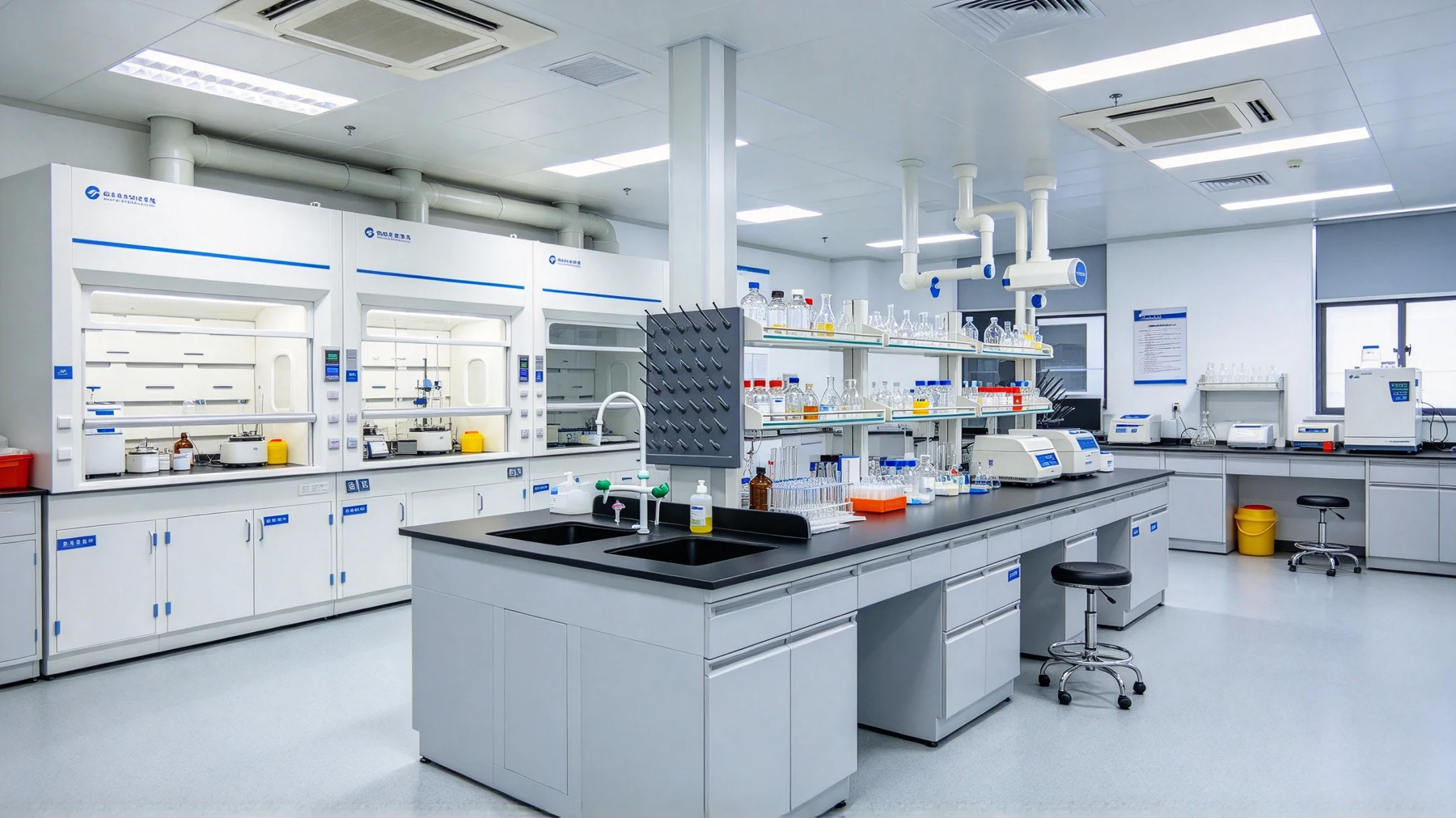
Testing, research, PCR / molecular, chemical and third-party laboratories require stable environments. Heat-generating equipment, volatile substances, biological samples and precision instruments make temperature, humidity, cleanliness, pressure gradients and supply–exhaust balance important to safe operation and reliable results.
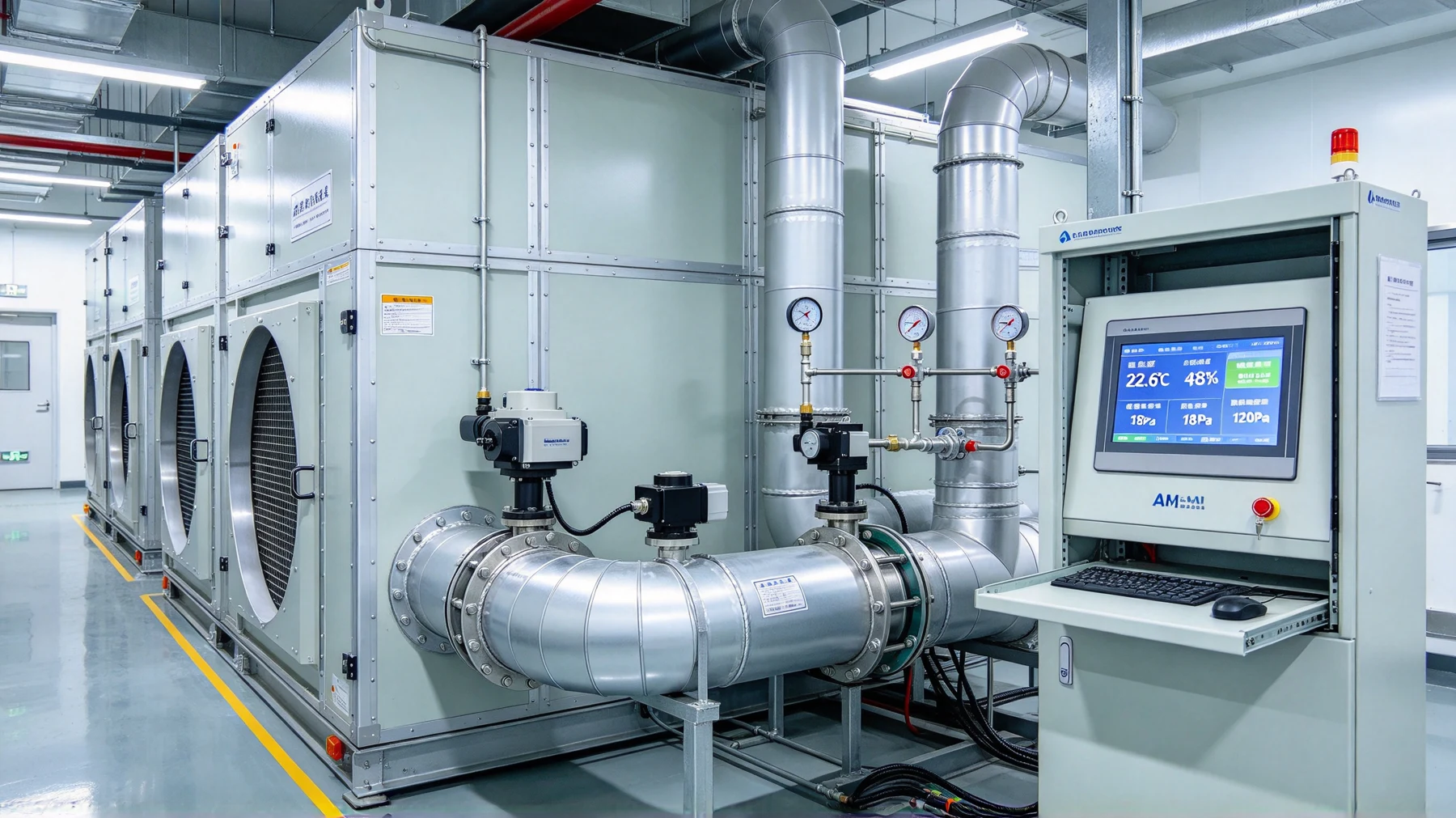
Airmaster combines fresh air, air handling, heating and cooling, make-up air, exhaust coordination and intelligent controls around laboratory processes, equipment loads and safety requirements.
STABLE AIR
PRECISE CONTROL
02.1 / TYPICAL APPLICATIONS
Different laboratories.
Coordinated environmental control.
Match each laboratory zone to its process, equipment and operating schedule.
Discuss Your Project
Third-party testing
Balance staff comfort, instrument operation, stable temperature and humidity, and room independence.
PCR / molecular laboratories
Coordinate zoning, airflow direction, pressure gradients, cleanliness and fresh-air / exhaust arrangements.
Chemical laboratories
Manage fume-hood and local exhaust loads with make-up air, heating, cooling and stable room pressure.
Microbiology laboratories
Coordinate cleanliness, cross-contamination control, filtration and pressure relationships.
Precision instrument rooms
Limit temperature and humidity fluctuations and support continuous stable operation.
Research / teaching laboratories
Use flexible zoning and energy control for changing experiments and occupancy schedules.
02.2 / CUSTOMER & SCENARIO PAIN POINTS
Laboratory conditions
that must work together.
01
Sensitive experiments
Temperature, humidity and cleanliness fluctuations can affect repeatability and accuracy.
02
Variable exhaust demand
Fume hoods and local extraction require continuous make-up air and stable room pressure.
03
Complex pressure relationships
Sample preparation, clean work, contaminated operations and general analysis require different pressure zones.
04
Changing equipment loads
Long-running instruments generate heat; equipment cycling and occupancy change the cooling load.
05
Independent laboratory systems
Return air and transfer air must account for contaminants, odours and biological risks.
06
Continuous operation
Some laboratories require 24-hour environmental control, status monitoring and accessible maintenance.
02.3 / ENVIRONMENTAL CONTROL REQUIREMENTS
Nine requirements.
One coordinated environment.
Temperature and humidity targets, cleanliness, air-change rates and pressure values must follow local standards, laboratory processes and project requirements.
01. Temperature and humidity
Manage equipment heat gains, room stability, condensation and static-electricity risks.
01
02. Cleanliness and air distribution
Coordinate filtration and airflow to limit dead zones, short-circuiting and cross-contamination.
02
03. Pressure and ventilation
Balance pressure gradients, fresh air, make-up air and independent exhaust.
03
04. Stable, monitored operation
Consider vibration and noise while monitoring environmental conditions, filters and equipment interlocks.
04
From air treatment
to coordinated room control.
Configure the system around laboratory functions, exhaust demand and required environmental precision.
Zoned AHUs
Divide laboratories into independent zones. AAHM-N or DX units combine filtration, cooling, heating, dehumidification, fresh-air treatment and zoned supply.
Air balance
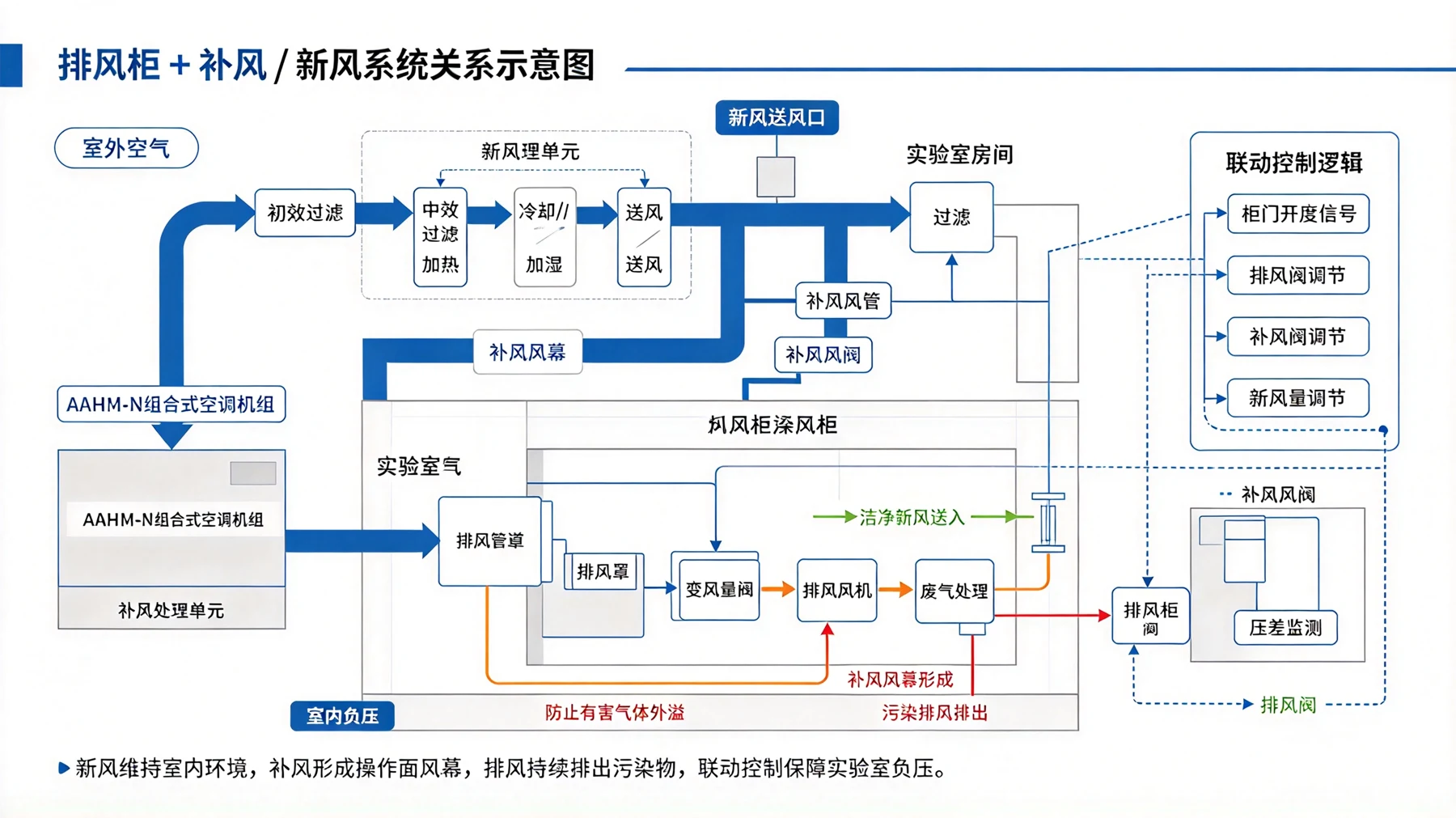
Coordinate make-up air with fume hoods and equipment exhaust to maintain target room pressure. Separate contaminated exhaust as required.
Precision control
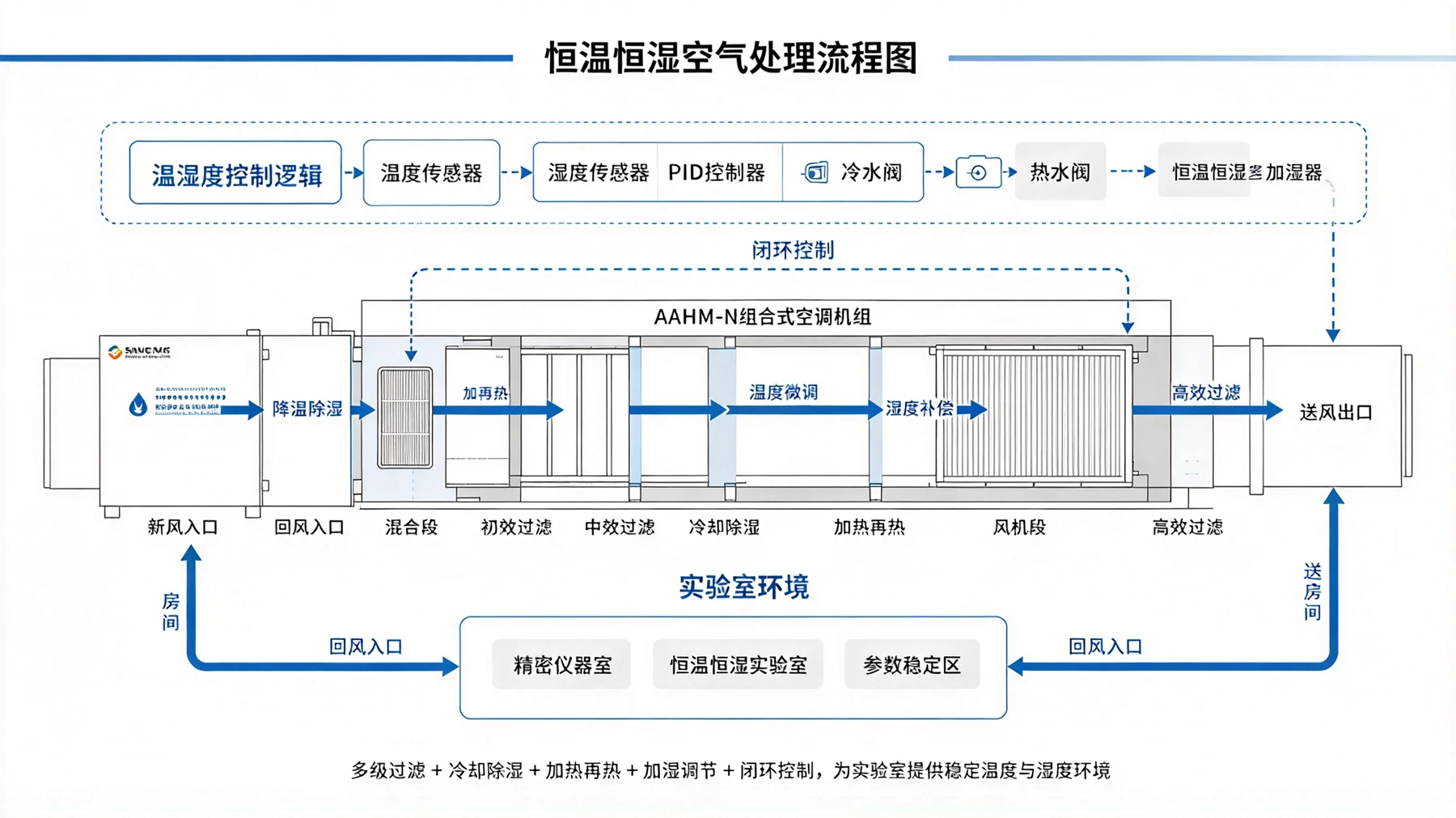
Coordinate cooling, reheat, humidification and dehumidification for precision instrument and metrology rooms.
Pressure control
Balance supply, return and exhaust between clean, buffer and contaminated zones, using pressure feedback.
System interlocks
Interlock exhaust, make-up air, dampers and air-conditioning equipment; monitor environmental conditions, filters and faults.
02.5 / SYSTEM CONFIGURATION BY AREA
A configuration framework
for laboratory projects.
| Laboratory area | System configuration approach | Control objectives |
|---|---|---|
| PCR / molecular laboratory | AAHM-N / DX AHU + independent exhaust + pressure monitoring + intelligent control | Zoned pressure, cleanliness, temperature, humidity and supply–exhaust balance |
| Chemical laboratory | Fresh-air / make-up-air AHU + fume-hood exhaust + chiller / heat pump + control | Exhaust balance, negative pressure and sensible / latent loads |
| Microbiology laboratory | AAHM-N + multi-stage filtration + exhaust + intelligent control | Cleanliness, contamination control, pressure and filter status |
| Precision instrument room | Dedicated AHU / DX AHU + precise temperature and humidity control | Environmental fluctuations, equipment heat, noise and stable operation |
| Third-party testing centre | Central chiller / heat pump + zoned AHUs + FCUs + intelligent control | Independent zones, changing loads and overall efficiency |
| Research / teaching laboratory | Modular AHU + FCU / local terminal + central control | Flexible zoning, on-demand operation, fresh air and maintenance |
These configurations are conceptual guidance, not construction designs or final equipment selections. Quantities, capacities, functional sections and control sequences require project design and technical selection.
Environmental control requirements
| Control item | Key requirement |
|---|---|
| Temperature stability | Control fluctuations to suit instruments and experiments while adapting to equipment heat gains. |
| Humidity control | Limit condensation, sample changes and equipment risks; avoid excessively dry conditions and static electricity. |
| Cleanliness | Select filtration and air-cleaning arrangements for the laboratory use and classify critical zones where required. |
| Pressure gradients | Establish appropriate positive or negative pressure relationships between clean, general and contaminated zones. |
| Fresh air and make-up air | Calculate supply for fume hoods, local exhaust and occupancy to avoid loss of room pressure. |
| Exhaust safety | Use independent exhaust for hazardous, odorous or potentially contaminated air, with treatment suited to project requirements. |
| Air distribution | Reduce dead zones and short-circuiting and prevent contaminated air returning to clean or general laboratory areas. |
| Low vibration and stability | Consider air velocity, noise and system stability in precision instrument rooms. |
| Intelligent monitoring | Monitor temperature, humidity, pressure, fans, dampers, filters and alarms with system interlocks. |
System diagrams
The following diagrams are supplied in the source document; their embedded labels are in Chinese.
-
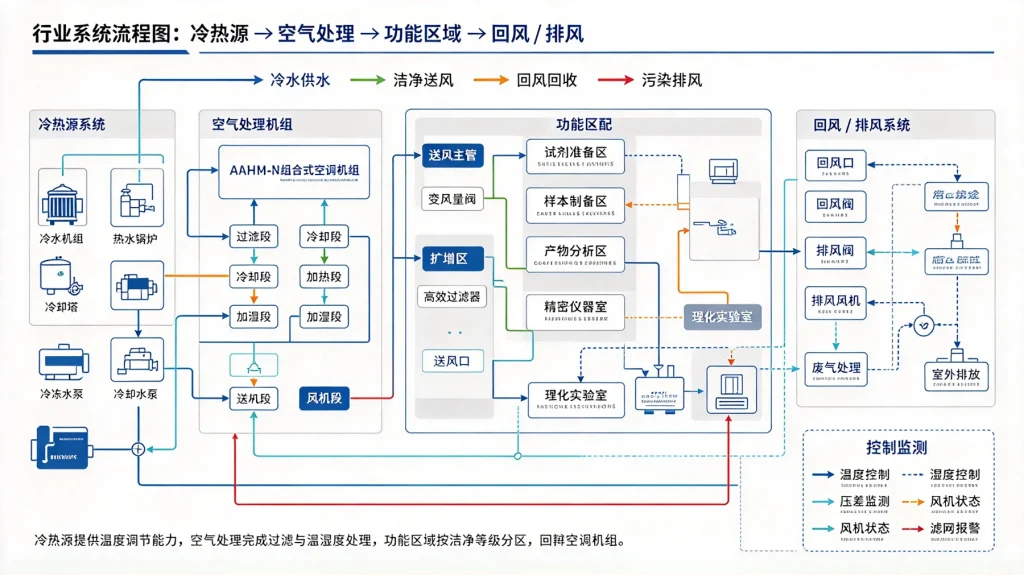
- Laboratory HVAC system flow
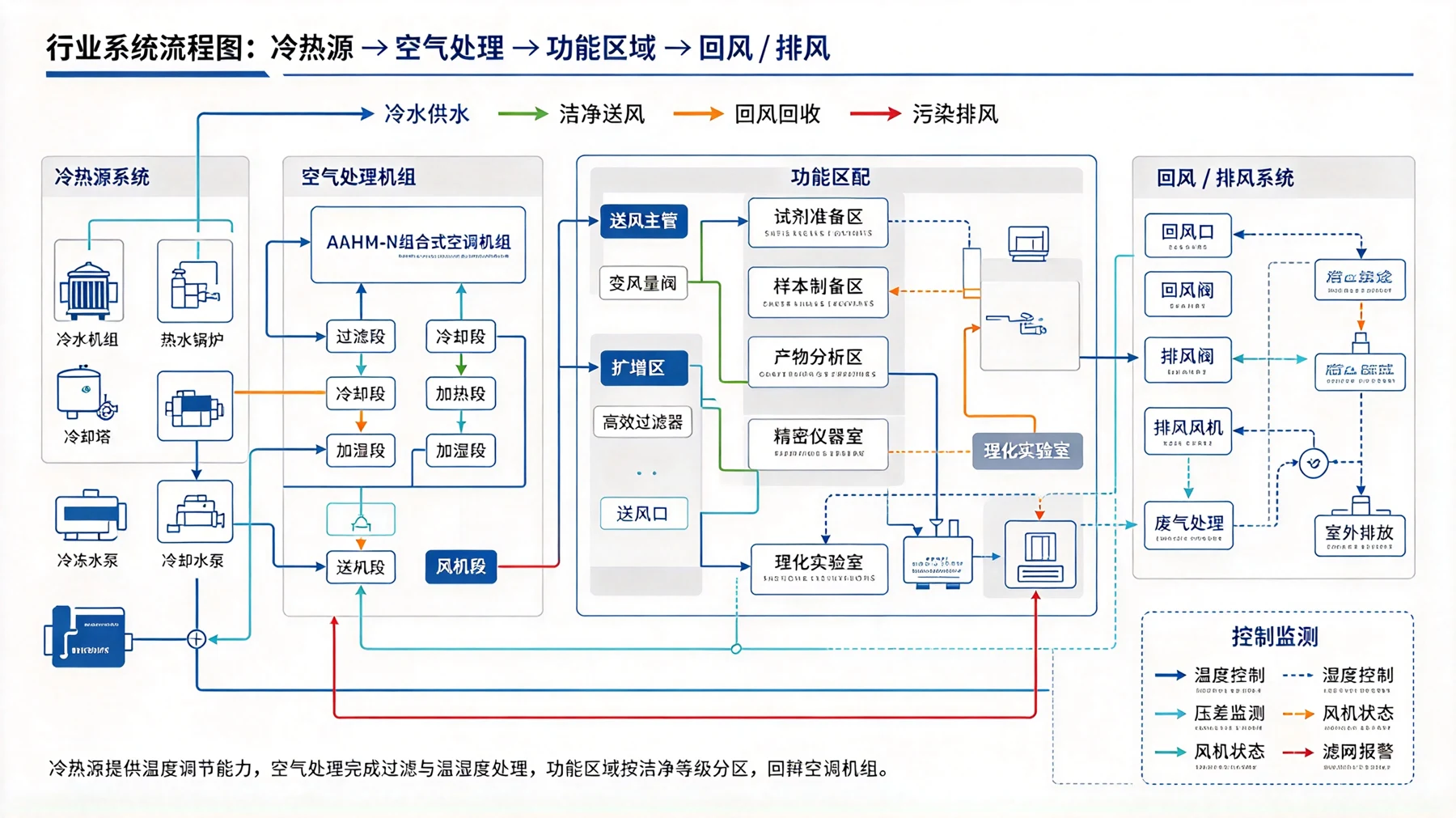
-
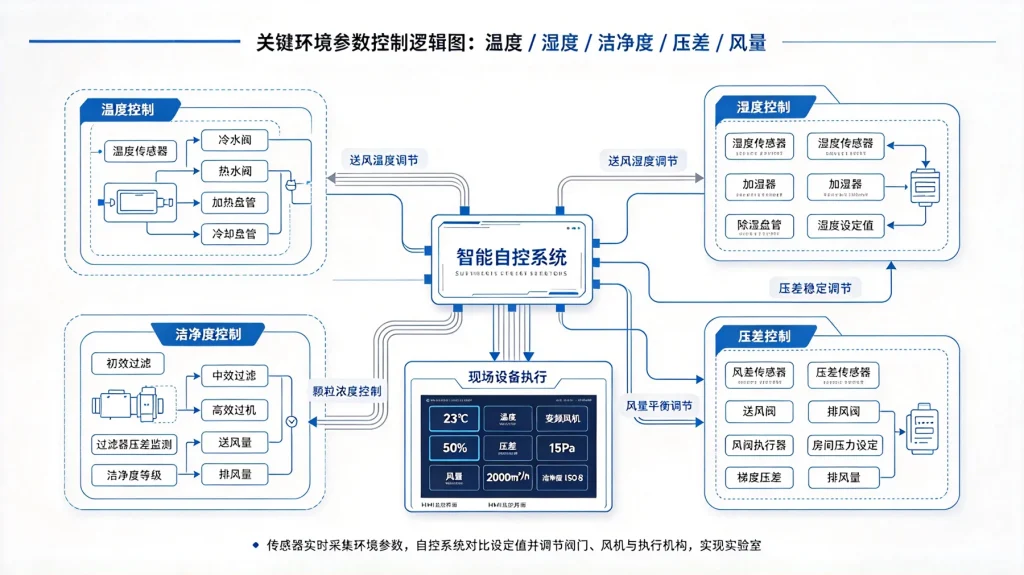
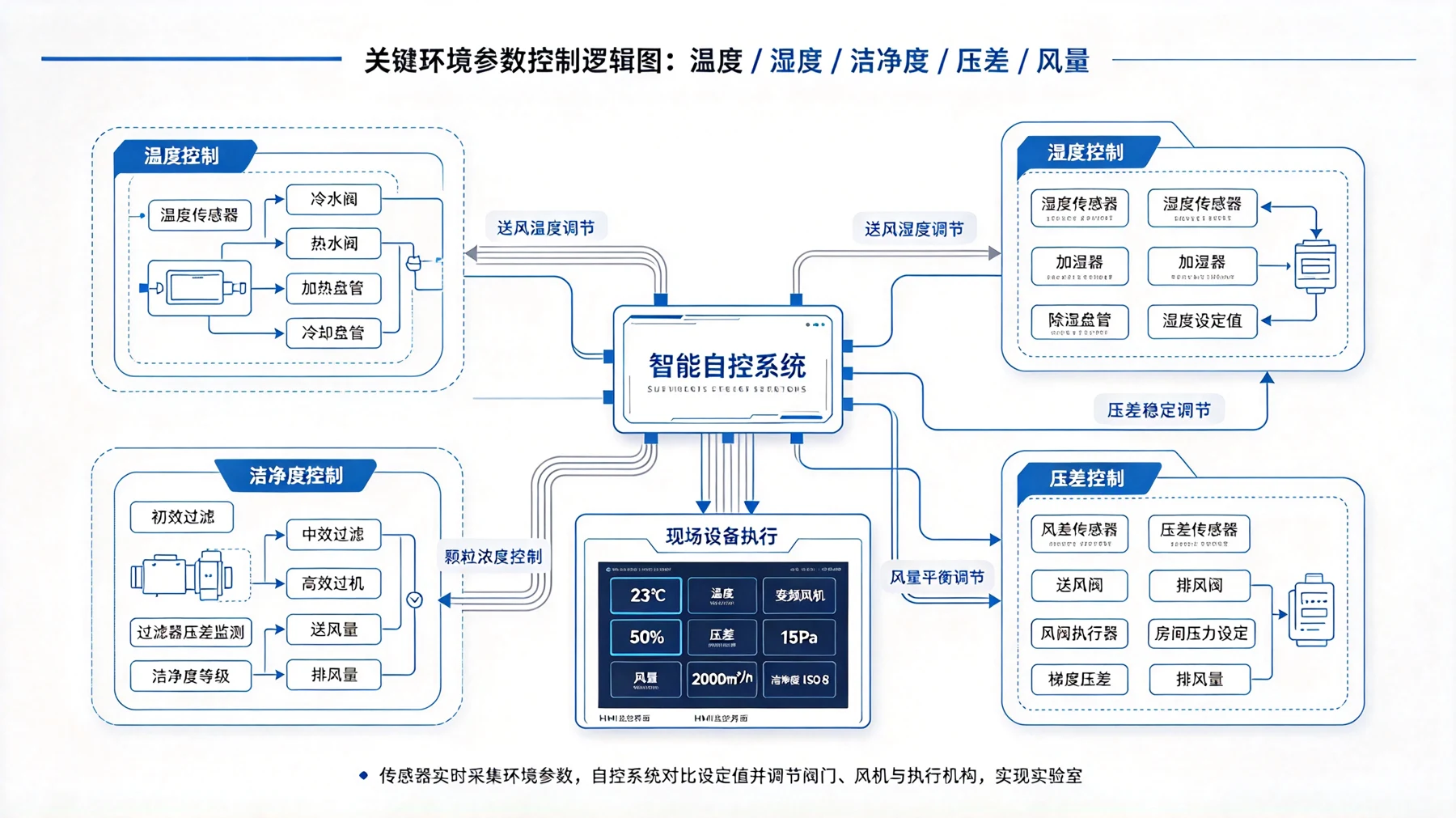
- Environmental monitoring and control logic
-
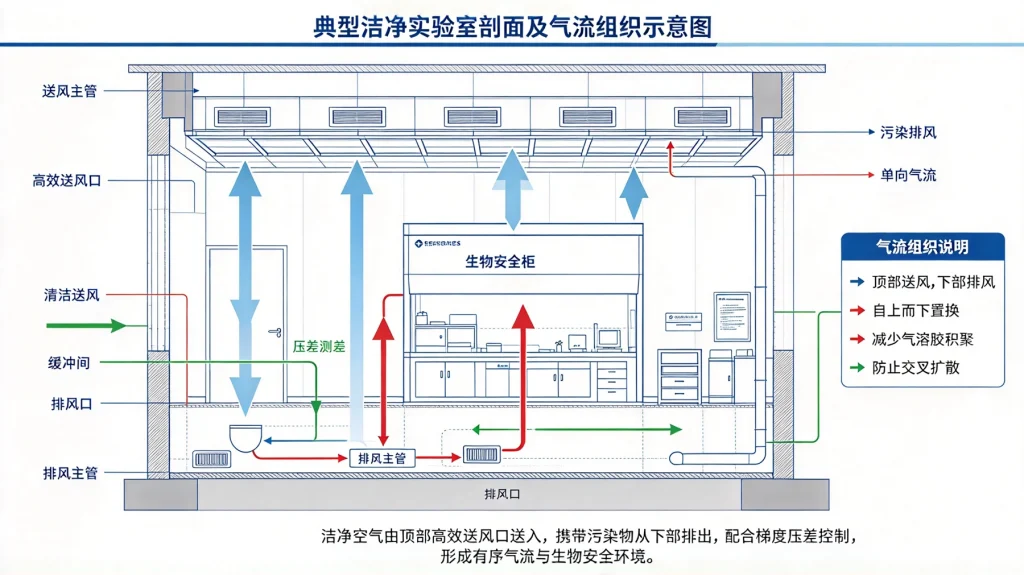
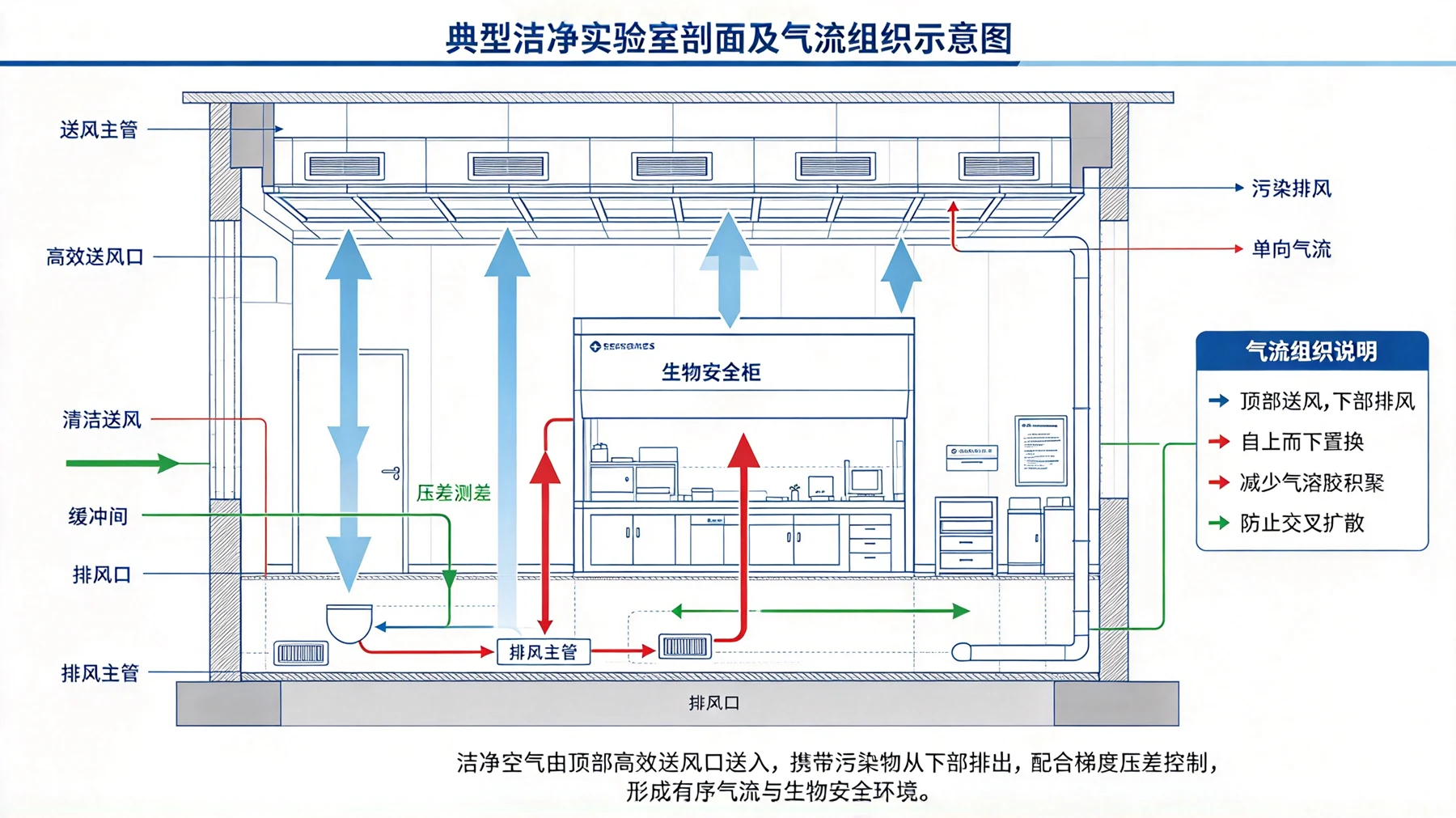
- Pressure gradients and air distribution
-
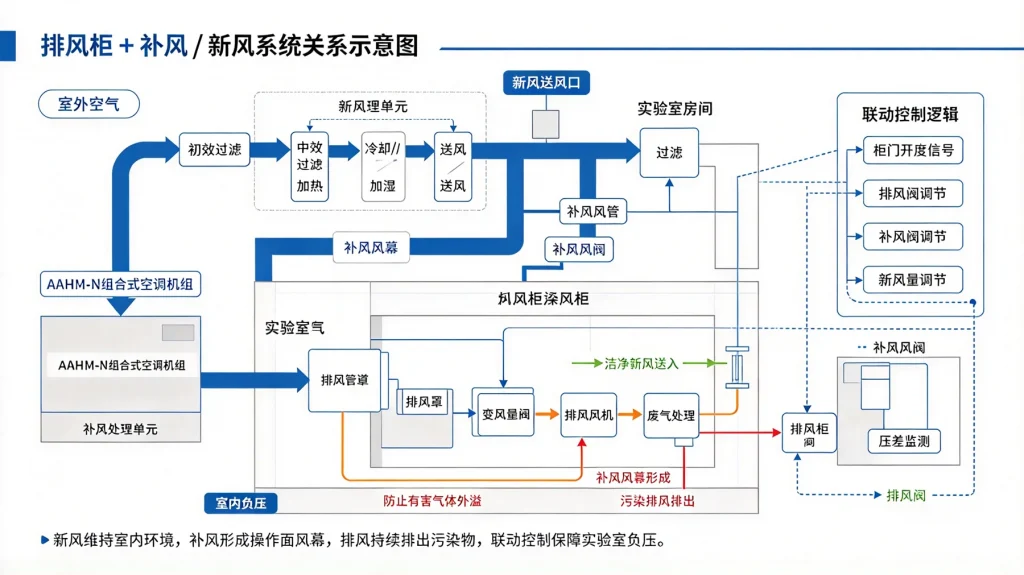
- Fume-hood exhaust and make-up air
-
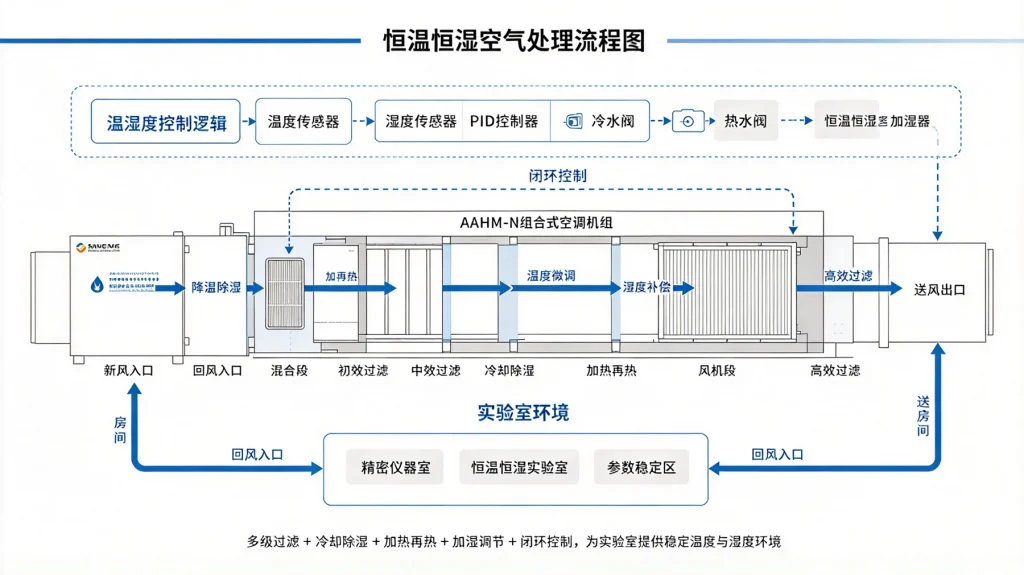
- Temperature and humidity air-treatment process
Reference project: Jakarta PCR Laboratory
The supplied document describes an AAHM-N modular air-handling system with PLC / DDC intelligent controls for a PCR laboratory in Jakarta, Indonesia. The system combines multi-stage filtration, temperature and humidity treatment, pressure monitoring and coordinated supply and exhaust.
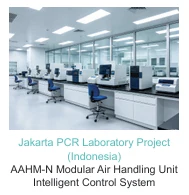
Equipment and control
AAHM-N air-handling units, exhaust equipment and fume hoods, variable-air-volume dampers and actuators, pressure sensors, PLC controls with HMI, supply / exhaust filters and duct components form the documented system. Control functions include fan and filter alarms, pressure feedback, closed-loop temperature and humidity regulation, local / remote monitoring and supply–exhaust interlocks.
Documented project parameters
| Item | Source-document information |
|---|---|
| AHU construction | EN1886 D1 strength; 50 mm double-skin insulation; T2 thermal performance and TB2 thermal bridging; leakage ≤1% at 1500 Pa; stated F9 filter-bypass performance. |
| Operating environment | 22–26 °C; 45–60% relative humidity; ISO 7/8 cleanliness as stated in the supplied project material. |
| Pressure control | Monitored negative-pressure gradients, automatic damper / fan adjustment and pressure alarms. |
| Maintenance | Routine filter differential-pressure inspection and equipment servicing; local and remote status monitoring. |
These figures describe the supplied reference material and are not universal laboratory setpoints or a performance guarantee for other projects. Final zoning, airflow direction, equipment ratings and environmental targets must be confirmed for the intended process and applicable requirements.
The document identifies modular site assembly, corrosion-resistant construction for tropical conditions, stable environmental control and coordinated maintenance monitoring as project benefits.
Related product details
- AAHM-N Modular Air Handling Unit
- Direct Expansion Air Handling Unit
- Four-Pipe Air-Cooled Chiller / Heat Pump
- Intelligent Control System
Source project functional zoning
The following values are transcribed from the embedded Jakarta PCR project worksheet. They describe that source proposal and must be reviewed against the specific processes, risk assessment and applicable project requirements before use.
| Zone | Function | Source relative pressure | Source design intent |
|---|---|---|---|
| Reagent preparation | Reagent storage, dispensing and reaction mix preparation | +10 to +15 Pa | Separate buffer; prevent sample aerosols entering |
| Sample preparation | Receipt, inactivation and nucleic acid extraction | −15 to −20 Pa | Biological safety cabinet operation; independent exhaust |
| Amplification | Nucleic acid amplification | −25 to −30 Pa | Contain amplification products |
| Product analysis | Analysis of amplification products | −30 to −35 Pa | Lowest pressure in the source zoning sequence |
| Buffer / changing / decontamination | Changing, disinfection and material transfer | Transition differential | Independent buffers and interlocked transfer windows |
Additional product details
02.6 / RECOMMENDED PRODUCTS
Equipment for laboratory
air and environmental control.
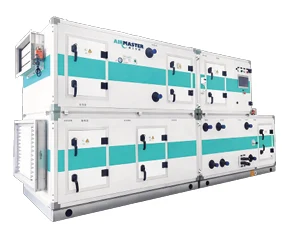
AAHM-N Modular Air Handling Unit
Fresh-air treatment, stable temperature and humidity, and configurable functional sections.
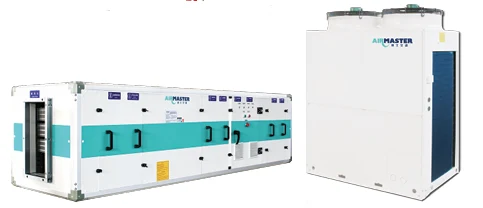
Direct Expansion Air Handling Unit
Independent laboratories or projects without a central heating / cooling source.
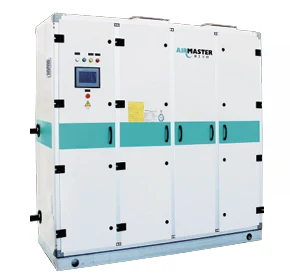
EU Series Smart Air-Conditioning Unit
Integrated equipment for laboratory areas with limited plant-room space.
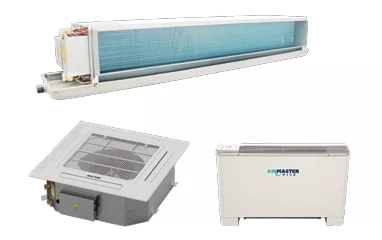
AFCU Series Fan Coil Unit
Offices, corridors and general auxiliary laboratory spaces.
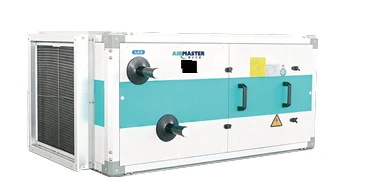
Cabinet Fan Coil Unit
Larger auxiliary spaces or areas requiring higher external static pressure.
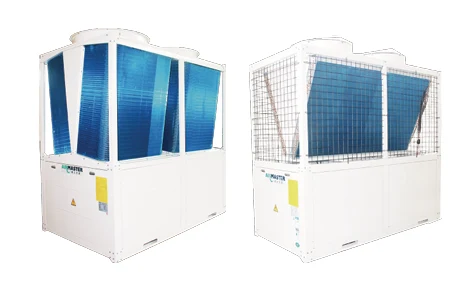
Air-Cooled Heat Pump Chiller
Central heating and cooling for small and medium laboratory buildings.
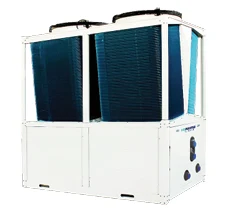
Four-Pipe Air-Cooled Chiller / Heat Pump
Simultaneous heating and cooling demands in different laboratory zones.
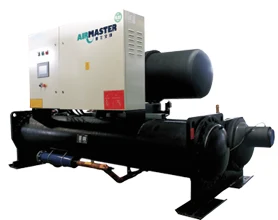
AASL (R) Water-Cooled Screw Chiller
Central cooling for larger laboratory buildings.
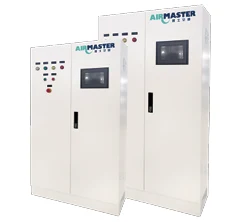
Intelligent Control System
Supply–exhaust interlocks, pressure monitoring and equipment status management.
02.7 / WHY AIRMASTER
Coordinated engineering
for laboratory environments.
01
Flexible zoning
Independent air handling and controls for different laboratory functions.
02
Pressure balance
Coordinated supply, return and exhaust maintain pressure gradients and airflow direction.
03
Stable temperature and humidity
Adapt to equipment heat gains and changing exhaust demand.
04
Integrated control
Interlock AHUs, exhaust, make-up air, dampers and monitoring.
05
Modular engineering
Configure filters, coils, humidification, fans and service access around project needs.